

How To Make A Wii Laptop
Do you lot love your Wii and its power to play all GameCube games perfectly but wish you could take it on the become similar a Gameboy?
Well, I definitely did and if you're like me and so do you. And hither is the correct identify to learn how. There has never been a better time to go into the Wii Portabilising (S-Tier) or whatsoever console portabilising in full general. The wealth of well-documented knowledge online, incredible gratis software, cutting-edge circuit boards, and the most helpful community are just some of the reasons why.
Personally, I dear GameCube games and notice I only get time to game nowadays when I am traveling from identify to place. So to rectify this problem I knew I had to create a device that would let me play my GameCube games perfectly. Emulation, not just being a bad and nefarious action (disclaimer - truthfully emulation is a skilful matter saving many corking games from the sands of fourth dimension), never reaches the height of playing on native hardware.
And so when you lot look deep enough into a Wii you volition eventually come to the realisation that really it is a supercharged GameCube with a whole agglomeration of Wii Remote Sensor capability attached on the side. From there I discovered the huge online community revolving around portabilising devices. Wii's also take non quite reached their nostalgic price gorging phase in their lifespan so you can still go them for clay cheap. The one I am using hither cost me $15 Australian dollars 2nd-hand.
So from in that location I was hooked and embarked on my G-Wii Journeying. Below is an image of Super Mario Sunshine playing on the Thousand-Wii.
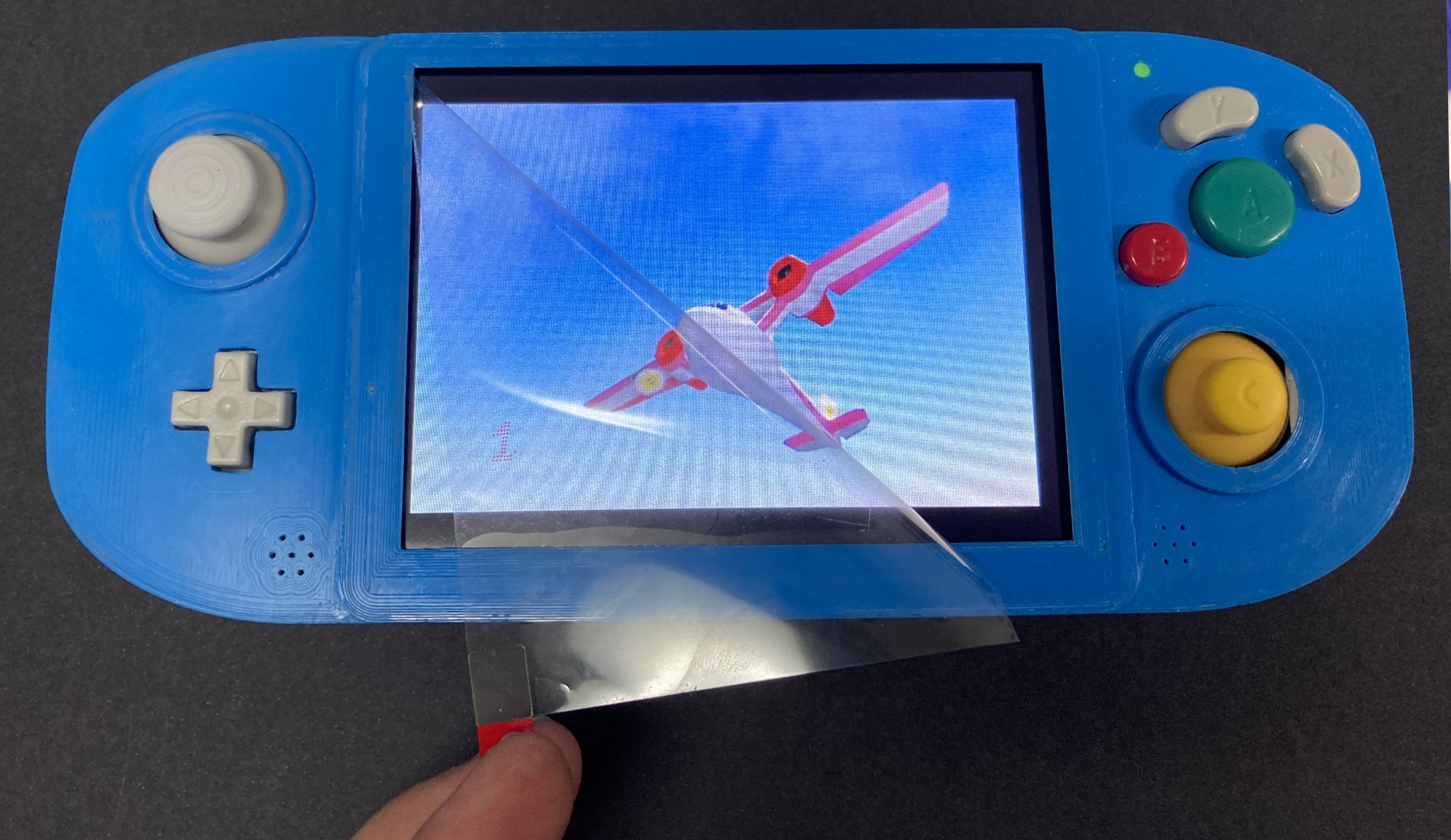
So I got my Ben Heck Portabilising Hat on and cracked on in. So allow'due south rip apart a $15 Wii that we've filled with extra software so have a diamond cutter to the motherboard until nosotros are left with just a tiny fragment. Then nosotros volition bring that fragment back to life using the about advanced life-back up circuitry I tin can get my hands on. Provide it a beating eye by soldering directly (and extremely carefully) to 18650s and from them create a battery that will concluding 4+ hours. So we will pull apart a Gamecube controller and use the buttons from it to maximise nostalgic and ergonomic happiness.
Overall, this makes for a beautiful trifecta of 3D Printing, Software, and Electronics.
Project Description
The goal is to make a Wii a handheld device with at least 4 hours of bombardment ability.
This takes some serious soldering. Recently I institute myself doing a whole bunch of solderless projects but I do not want the world to remember that soldering is something that should be avoided, it is just a unique skillset that takes time to go right. Beingness confident in soldering only takes practice, is a skill that yous will never forget, and volition open up doors to prototyping and hacking that you could never reach otherwise. And so here is the procedure I went through to create this portable Wii. Shout out to Kodak for getting me through the multiple edifice sessions. Most of the images in this guide accept a very high resolution. Open them up in a new browser so you can come across all the item. Run across the final internals of the build below just before I airtight the G-Wii upwardly.
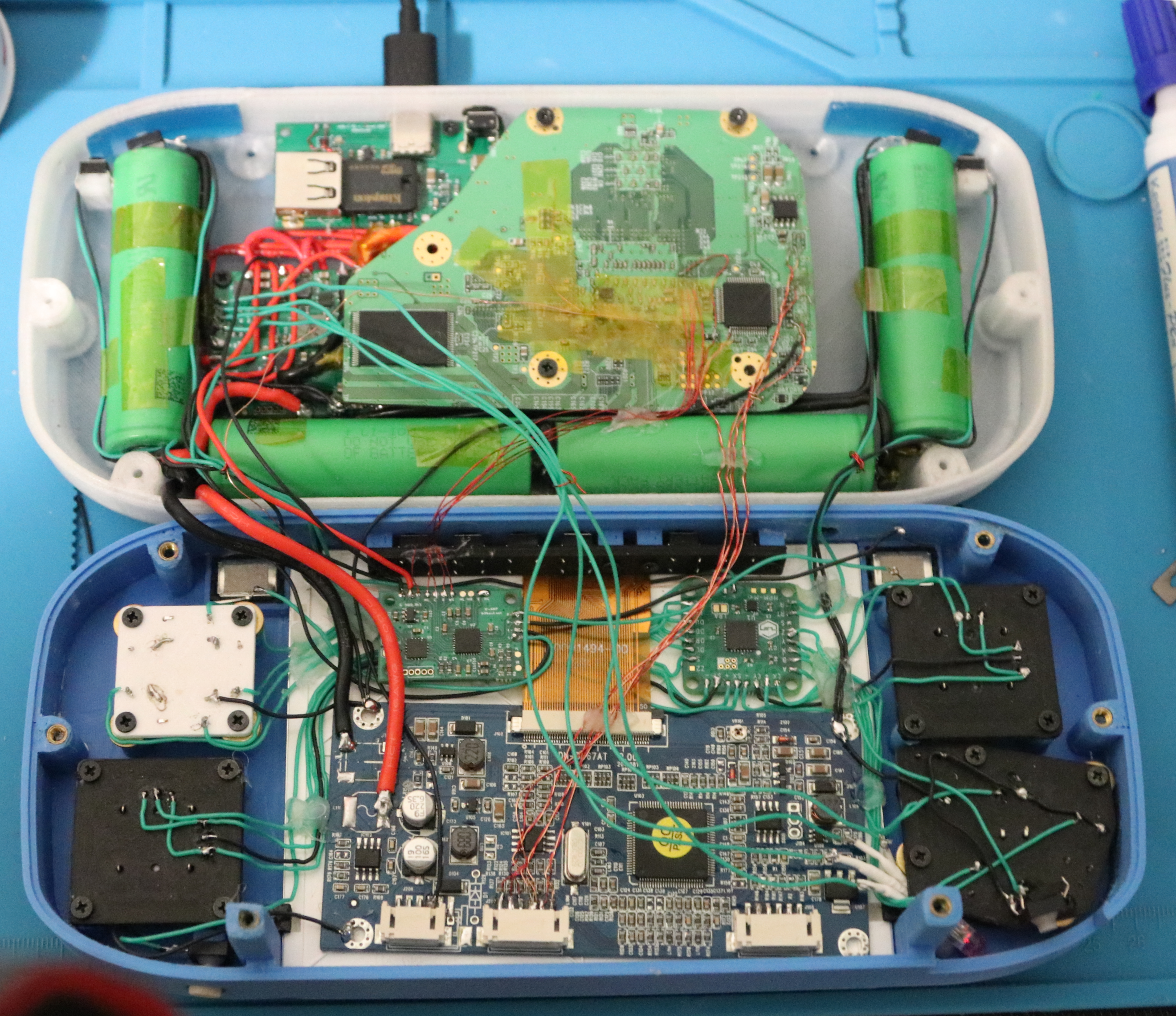
The contents of this Chiliad-Wii Build tin can be seen beneath.
- Tools Used
- Parts Required for the G-Wii
- 3D Print the Instance, Internal Mounting Components, and Shoulder Buttons
- Research and Research
- Software for the Wii to Portabilise it
- Wii on the Chopping Block
- Dry Fitting Componentry
- Soldering Bombardment Assembly and Installing Fan
- Soldering Wii Associates, Screwing it Down, and Start Breath (Composite Feed + Slight Setback)
- Soldering Push Assembly
- VGA, Audio Amp, Aux Cord, and Indicator LED
- Screw it Shut and Play!
If y'all want to build your own Thou-Wii or want to ask questions we are e'er available to answer questions and queries. Definitely check out theBitBuilt Forums too for a specific portable devices resource. If you have ideas to add please let me know your thoughts!
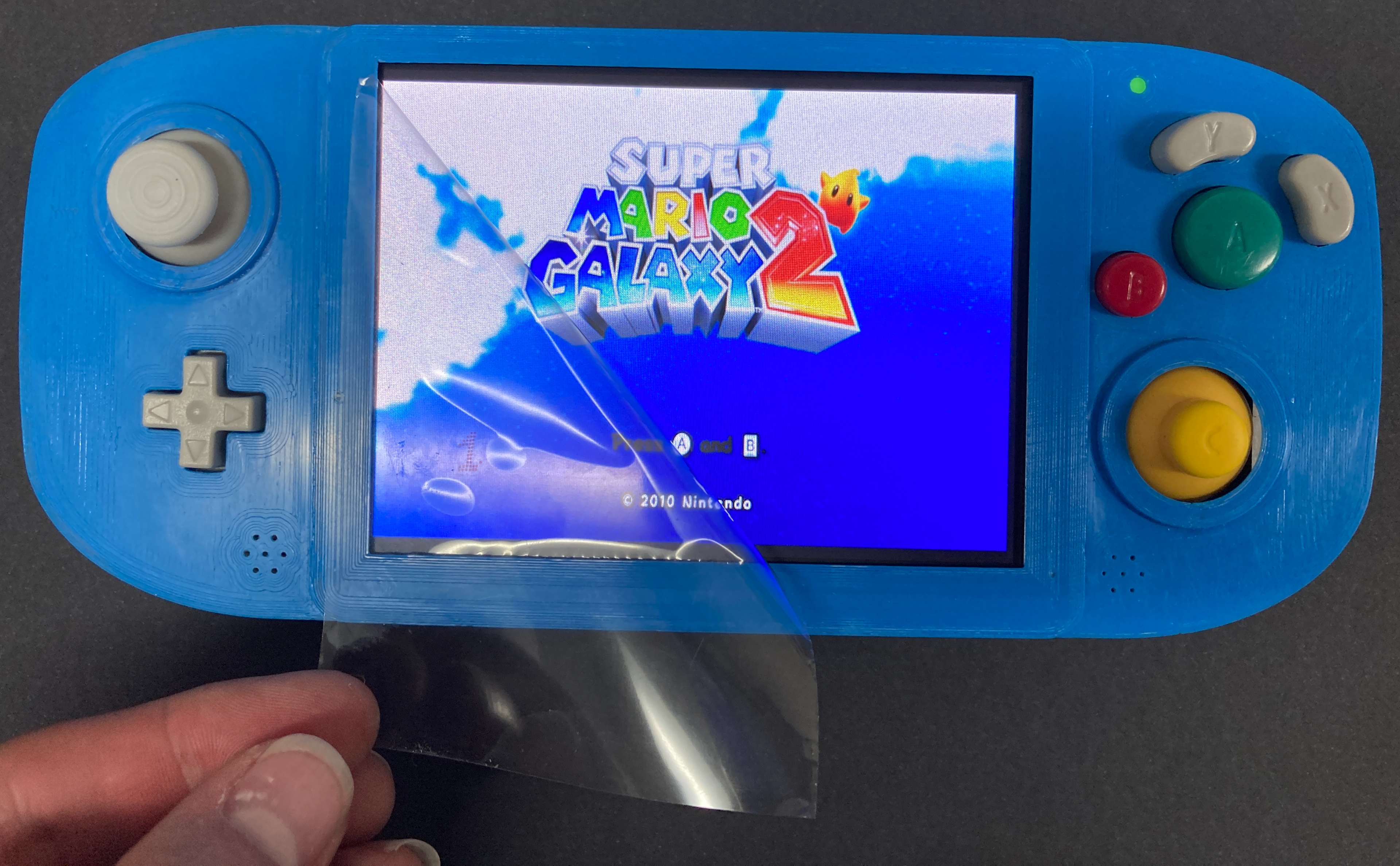
And to all those who say, why bother only get a switch (!), well can your switch play Super Mario Galaxy 2? Because this Chiliad-Wii can.
Tools Used
None of this would have been possible without the excellent tools I have been blessed to surround myself with. Thus below is a list of the tools I utilised to make this project a reality.
- Hakko FX-888D Digital Soldering Station(You lot are definitely going to want a temperature adjustable solder station for this build)
- Multimeter (When it incertitude beep information technology out)
- Tweezers
- Solder (I used only 1mm diameter just would have liked to use 0.5mm for the smaller wires)
- Flux(I love the Pens just got to put the cap on them when your done)
- Solder-Wick De-Solder Braid (This in combination with Flux is the best!)
- Kapton (Polymide) Record
- Affluent Cutters (Clippers)
- Hobby Knifeor Razor Blades
- Locking hemostatic forceps (I have two now)
- FFF 3D Printer and Filament (here is aguide to FFF 3D print better and I created the Shoulder buttons using a Creality LD-002R LCD Resin 3D Printer)
- Dremel with Diamond Tool Cutter
- SandPaper (Very fine Grit to smooth edges of Wii motherboard)
- Wire Stripper (spoil yourself, I didn't and my nails suffered because of it)
- Thermal Paste
- Compartment Box (Made my life much happier)
- Little Screwdriver set (Phillip, Flathead and when disassembling the Wii a Tri-Fly Screwdriver)
Parts Required for the G-Wii
I accept attempted to brand this as accurate and entire as possible. There is a lot of componentry that goes into creating 1 of these.
- Stranded Silicone Wires (Silicone wires are slap-up because the cover doesn't melt ) Spoil yourself and become more colours than 2 like me
- General Thin Wire
- Magnet Wire (2 colours definitely an advantage when you start twisting them I used AWG30 mainly)
- Thicker Stranded Silicone Wire (for the batteries, I establish this wire a little scrap as well thick but nevertheless doable )
- Tactile Buttons Alpine and Stout (Tall are proficient equally you can cutting them to size)
- Squishy Silicone Buttons
- 18650 Lithium Ion Cell x iv (You lot will be scratching and soldering directly to this fore-alarm)
- Audio Jack
- LED RGB Clear Common Anode
- Light Dispersal Circle Plastic Part
- Laptop Repair Spiral Fix M2 M2.5 and M3
- Wii Console with 4 Layer Motherboard (4 Layers run libation how to identify use this guide)
- Gamecube Controller for Buttons (I used two so I could get an extra Commencement push to use as the Power switch)
- At the time BitBuilt Circuit Boards. Now can source components at 4 Layer Tech (This allows you to set up up the Gamecube controls, Audio Amp for Sound, Ability Direction, Storage and USB-C functionality for a Wii) The circuit boards I used are now open source then you can too create them from scratch
- Speakers Part # SP-1511L
- 480 7 inch screen VGA and Screen Controller
- Small Fan, Cooling Metal, and Copper Rut Dispersal Plate
- Micro-SD card and Kingston USB drive
- CPE Filament (y'all can as well use PLA Filament just will not be every bit strong)
- Transparent Resin (can definitely but 3D print shoulder buttons with FFF printing)
Below is an image of my collection of parts all stored in my little compartment box. This box made me so much more efficient and it'due south utilise I cannot recommend more than highly when doing project like this.

3D Press the Case, Internal Mounting Components and Shoulder Buttons
All credit for the amazing case goes to Gunnar AKA Gman. He has open-sourced his CAD design observe them here. He does incredible work (for example he has created the World's Smallest Nintendo 64 Portable) and it is just one time you build in this case do you realise how much critical thought went into each step of the way. To go a instance built from scratch to this level information technology would have many revisions and noesis of the whole build process (something I definitely didn't know when I started). I modified his design slightly, making it easier for me to use threaded inserts and tiny artful changes. If you're going to alter the case to be very conscious of each millimetre yous alter every bit by the time you're done filling it with components each and every millimetre is a precious resource.
I wanted this case to last so I printed my cases using CPE and CPE + using an Ultimaker 3D Printer. For tips on how to 3D print with these materials bank check out this guide correct here. I spent the time refining the impress process till I got the exact issue I was looking for. Cleaning upwards the example was done advisedly with an Exacto knife. I wanted the back of the case to be transparent and so you could see the wiring inside. I am quite happy with my upshot. Tips on how to improve 3D printed results with transparent filament found here. The Extra internals to mount the controls I 3D printed using either ABS or CPE. Below are some images along my manner of press and iterating this case.


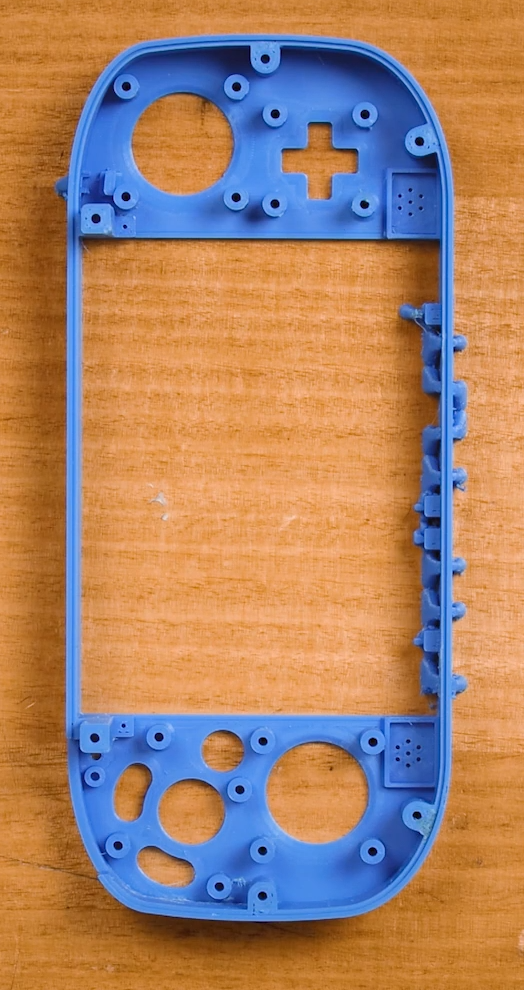
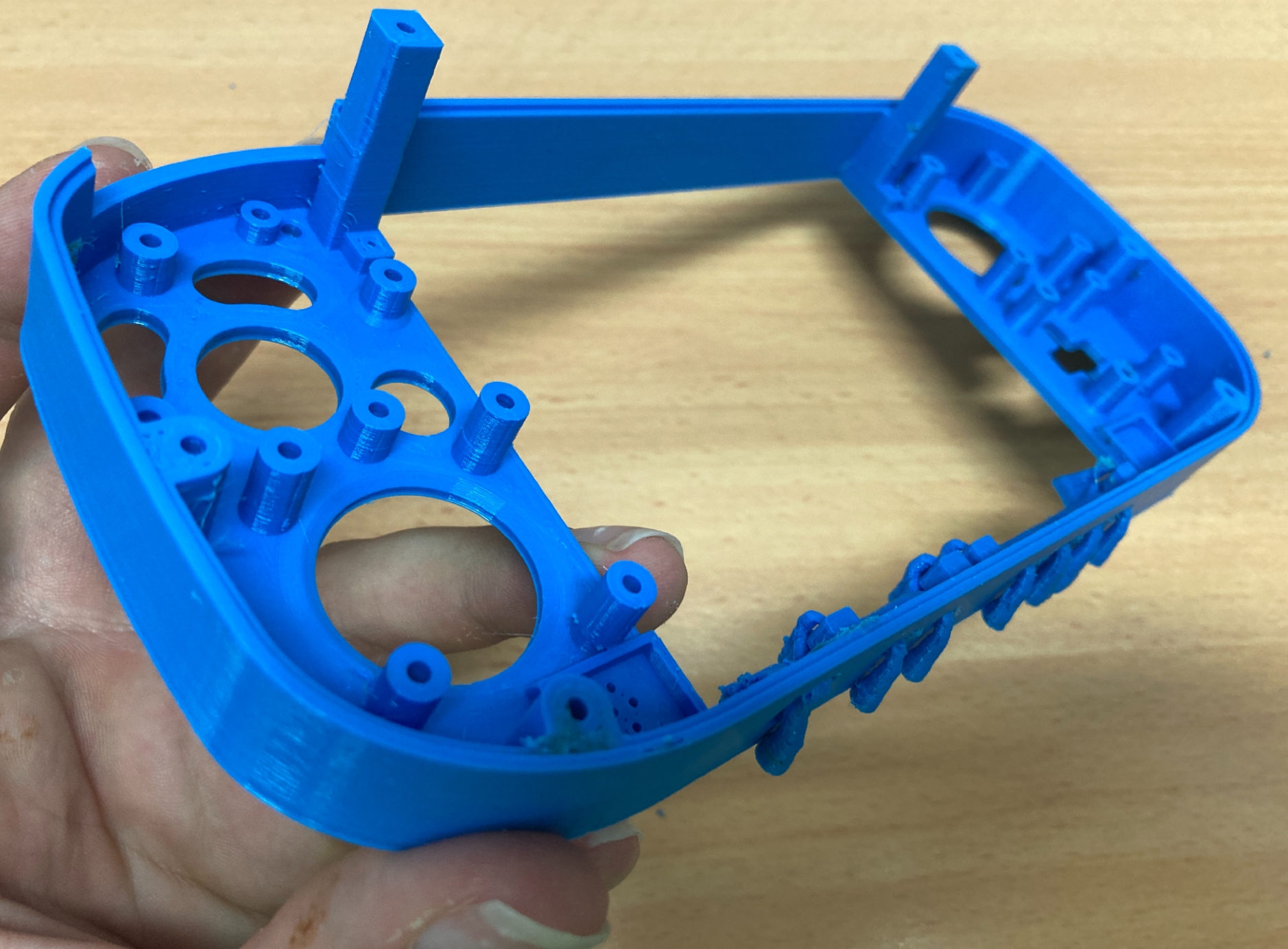

I also used a Creality LD-002R LCD Printer to create the buttons. Initially, I printed them using FDM simply was non happy with the color or the layer line feel on my fingertips. I used transparent filament and coloured them with alcohol inks and Pearl Ex Pulverisation much like this guide here. Below is an image of my initial prints which were done in black before I colourised them and an prototype of the buttons getting sliced in chitubox.
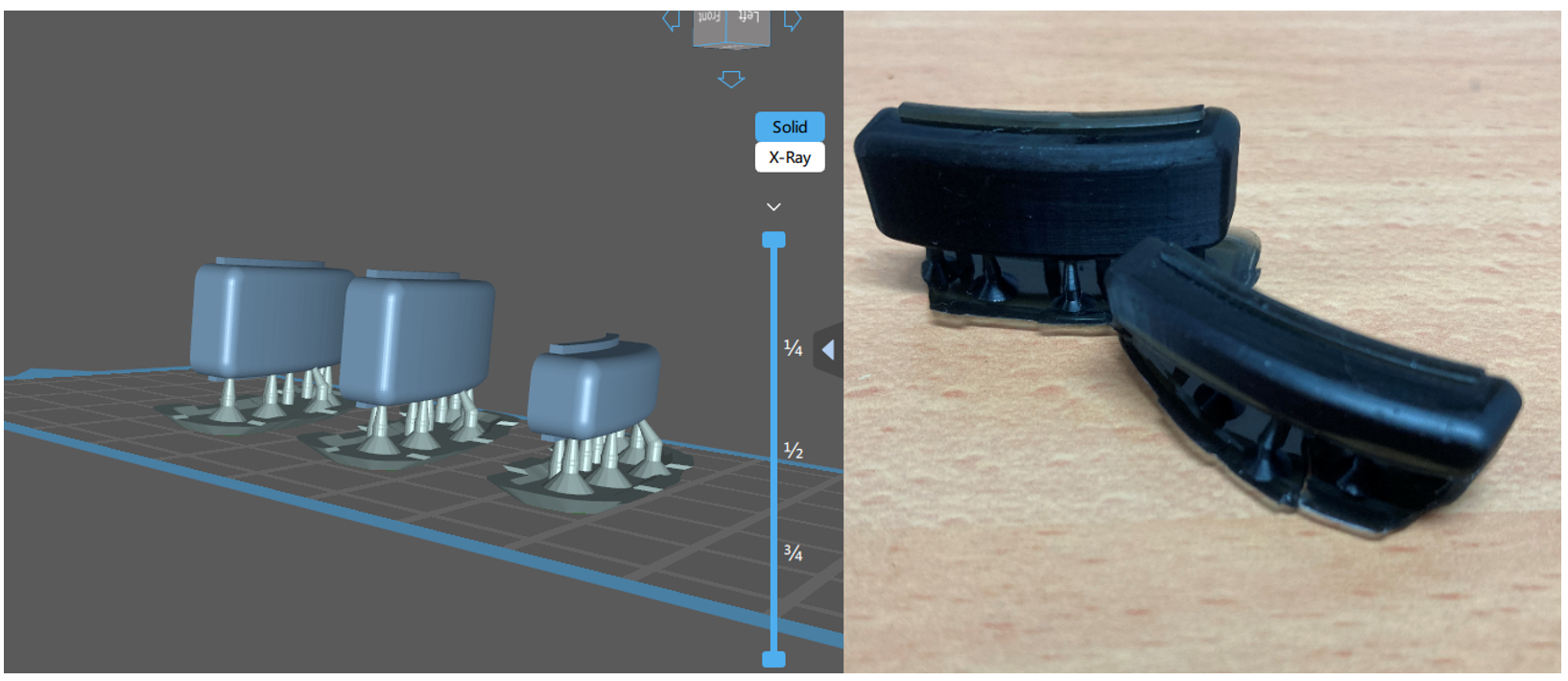
Research and Research
Large and very important pace. BitBuilt will have your dorsum for a lot of this. They used to have great build videos of the whole K-Wii process on youtube but sadly they take been removed. Then long as I'yard not stepping on whatever toes I have a strong desire to alive stream my side by side One thousand-Wii Build so others tin can have a video resources to work from. There is a huge corporeality of content to immerse yourself in. Resource links that I would recommend for specific Wii portablising bank check out these.
-Wii Anatomy 101 https://bitbuilt.net/forums/index.php?threads/wii-motherboard-anatomy-101.1286/
-Definitive Wii Trimming Guide https://bitbuilt.net/forums/index.php?threads/the-definitive-wii-trimming-guide.198/
-Revision Identification Guide https://bitbuilt.net/forums/index.php?threads/revision-identification-guide.863/
-Wii Bones Trimming Guide https://manual.bitbuilt.net/guide/wii-bones-trimming-guide/
-RV Loader Software (I used BBLoader only this is better) https://bitbuilt.net/forums/index.php?threads/rvloader-v1-0.4295/
-This Image for VGA Connecting https://manual.bitbuilt.net/media/photologue/photos/cache/DSC_0022_display.jpg
Software for the Wii to Portabilise Information technology
Before yous even recall nigh pulling autonomously your Wii yous volition need to install some software to it. You demand to take the homebrew channel is installed and updated on your Wii. There are a lot of guides on how to do this online. Y'all demand to employ an SD bill of fare that has been FAT32 formatted. Then you need to install either BB-Loader or RV-Loader to the Wii and run information technology. In the Research and Inquiry section is a guide on how to do it.
This software means that the Wii no longer requires WIFI, Bluetooth, MX Fleck to Kick. Also, it volition automatically send out 720x480 through the VGA. It also does a huge amount of other things also. Aurelio is the private backside this software and does an incredible chore at making portabilising easier and more intuitive than it has always been. Open Source Lawmaking as well!
You cannot do this once the Wii has been trimmed so practice it beforehand. With this software loaded you lot tin now burn Gamecube and Wii files and place them in a folder on a USB. Then you can run the game from the USB. Thus we no longer need a CD-Rom on our Wii to play games. You will only exist able to control the Wii using a Gamecube Controller at this bespeak.
Wii on the Chopping Block
With the software all organised and some games tested on a Television receiver screen, information technology's time to pull the Wii apart using mainly screwdrivers. Information technology was surprisingly difficult to pull autonomously, with a lot of hidden screws and I resorted to using the guide you can detect in the research and research section. Beneath shows some steps from the process of disassembly.
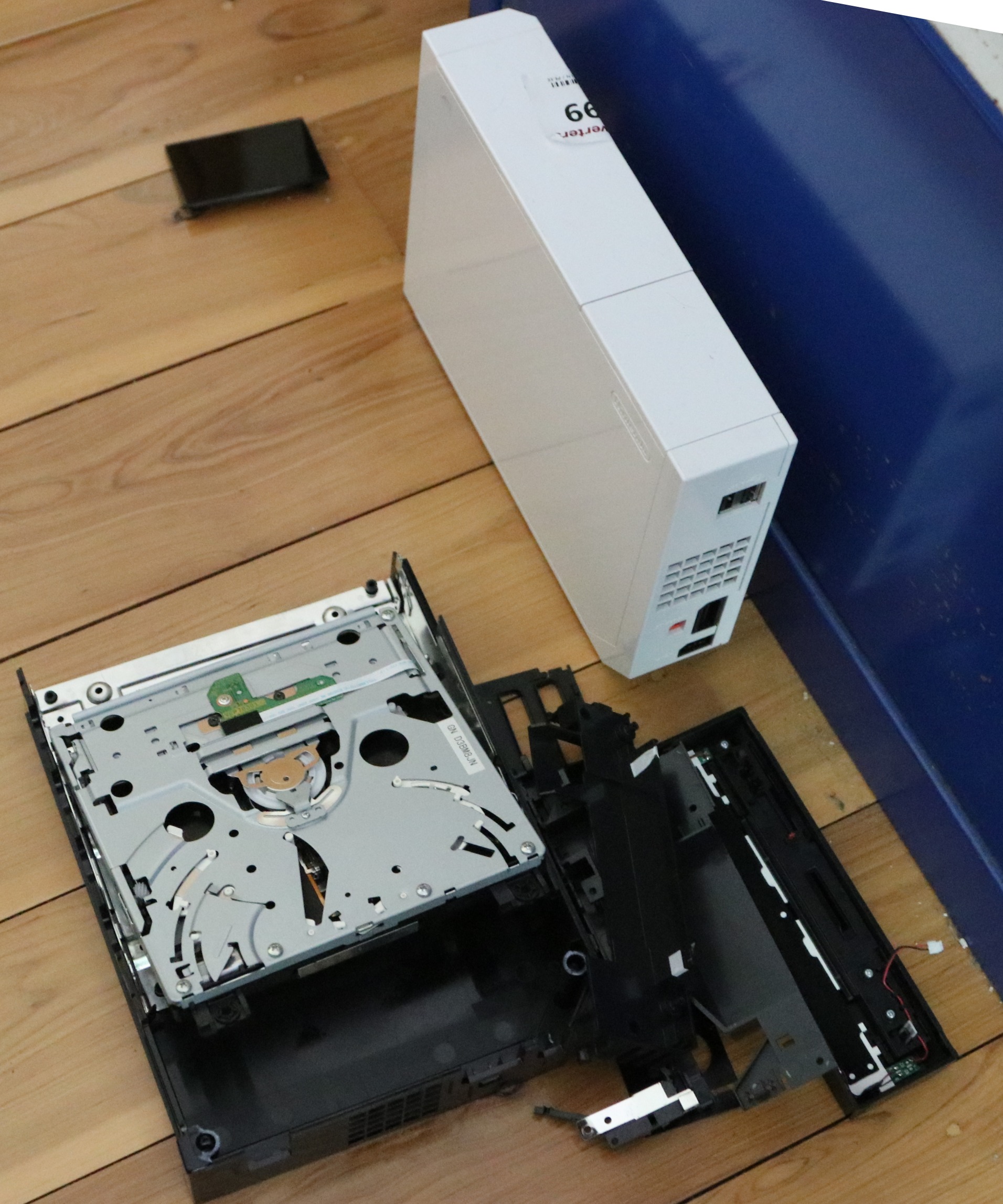

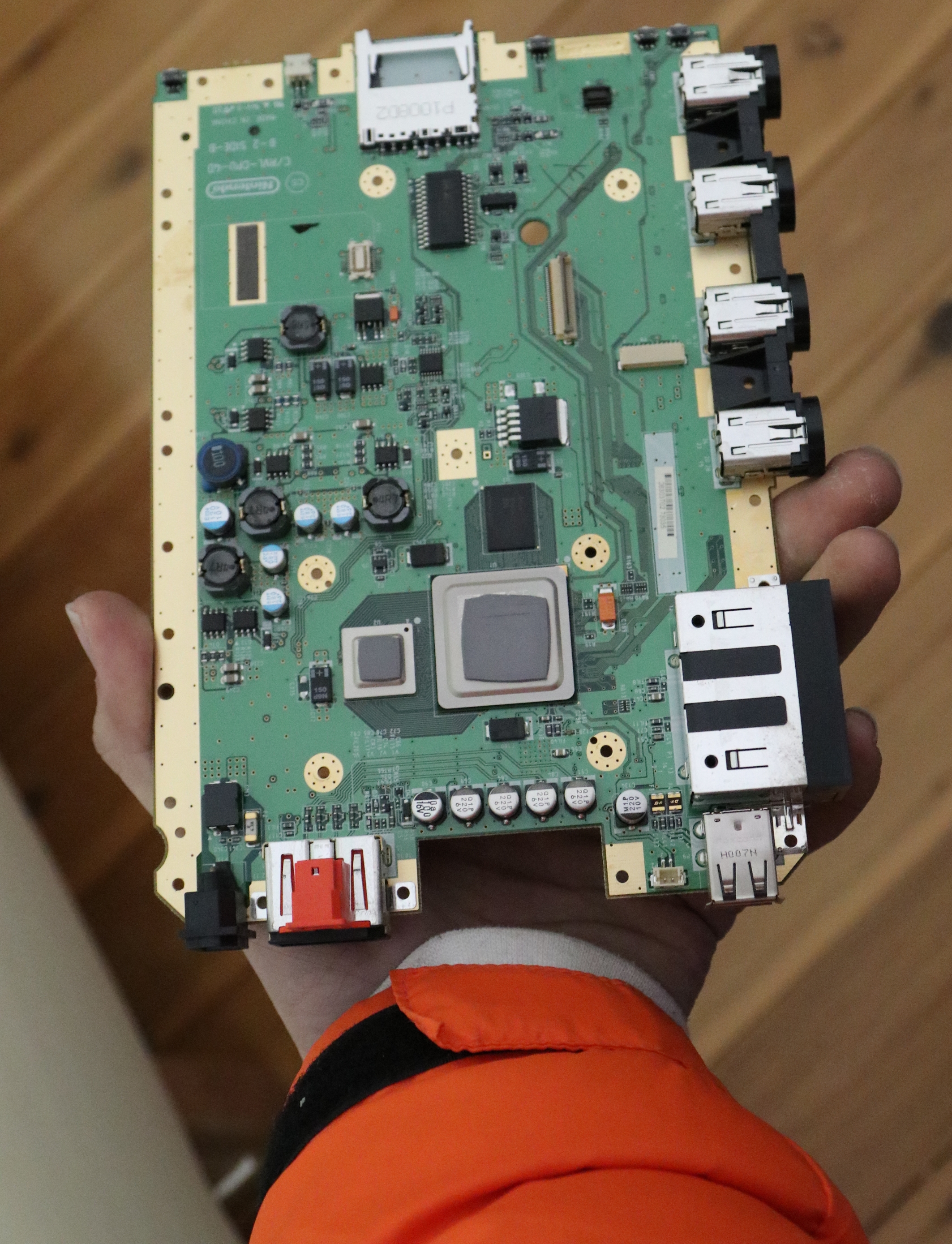
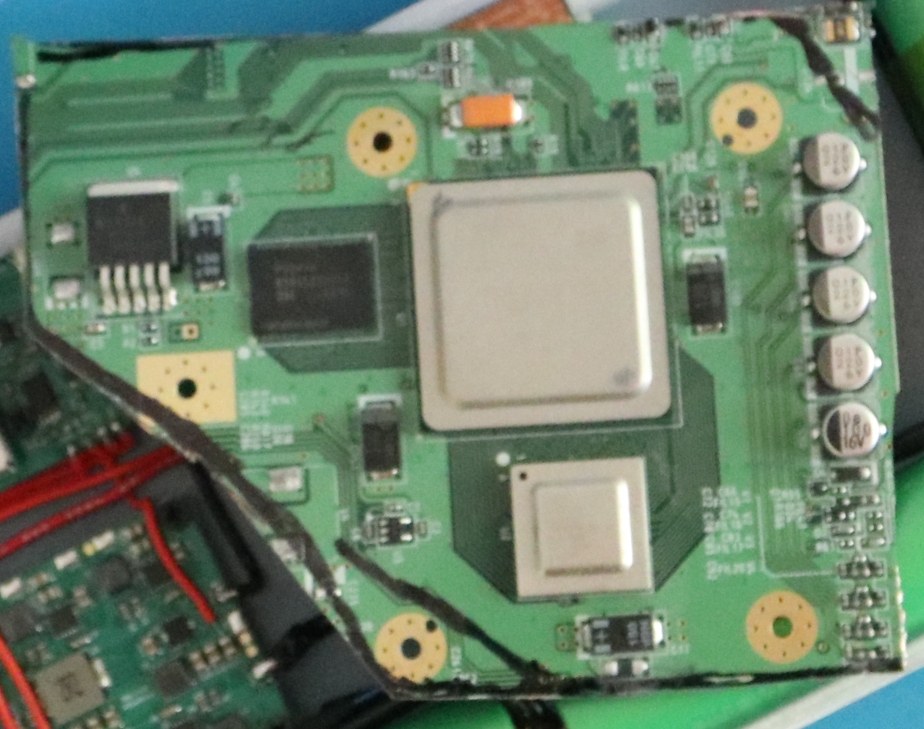
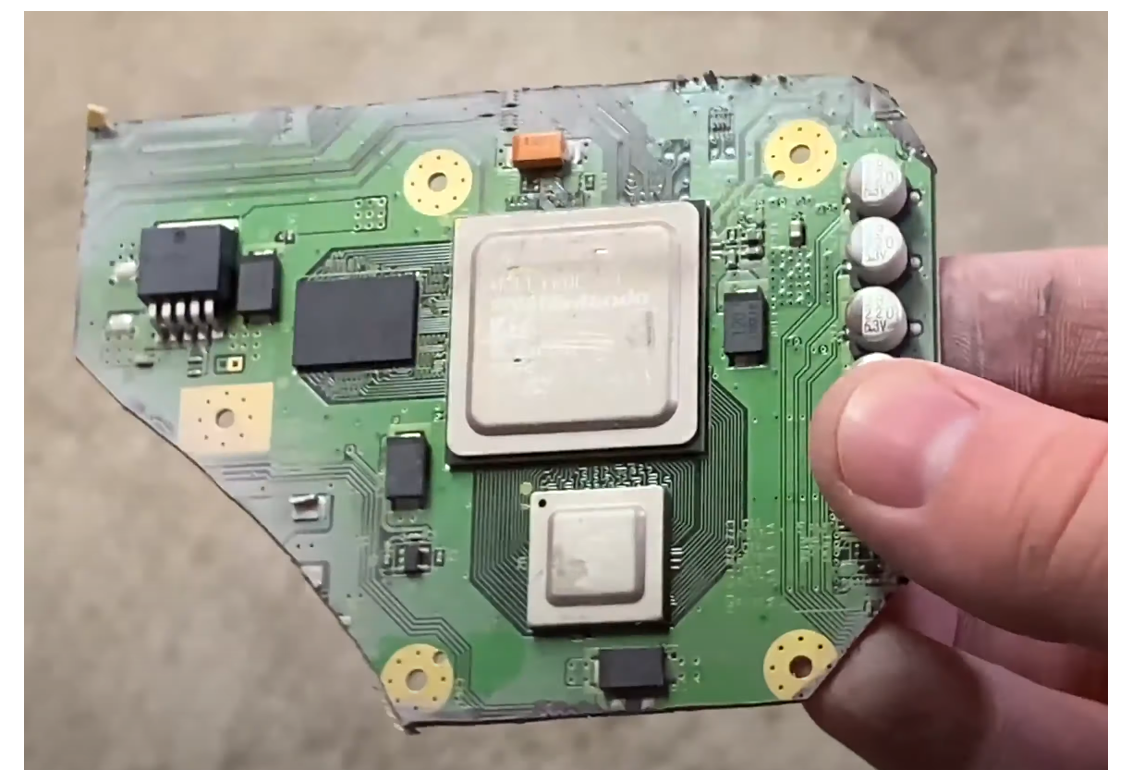
Then with the Motherboard free from its constraints I took my sharpie to cut out the main cutting then my Diamond cutter to it. An excellent video resource on how to exercise this can exist establish hither (the goal is to avert Nikey Swooshes). Have the fourth dimension to sand and make clean all the edges of the build. The G-Wii is a tight fit and by sanding advisedly you lot will forbid any of the copper traces on the 4 layer lath from shorting. An air compressor to clean the board would definitely be useful hither. Beneath shows a still from the video and my chopped Wii Board.
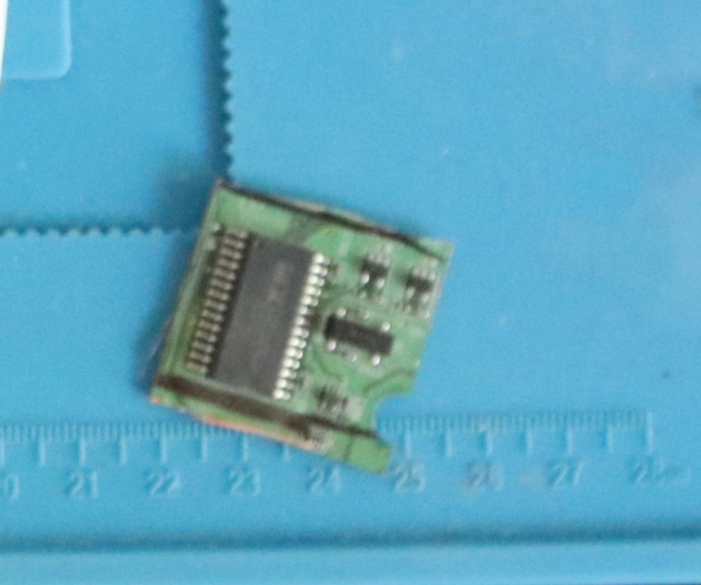
Y'all also demand to cut out the MX Fleck with the U10 and U9 IC. You won't demand to utilize the MX Flake (unless yous really want to play Animal Crossing or other games that require an RTC) just the U10 Scrap will need to be relocated and supersede the U5 IC.
Dry out Plumbing equipment Componentry
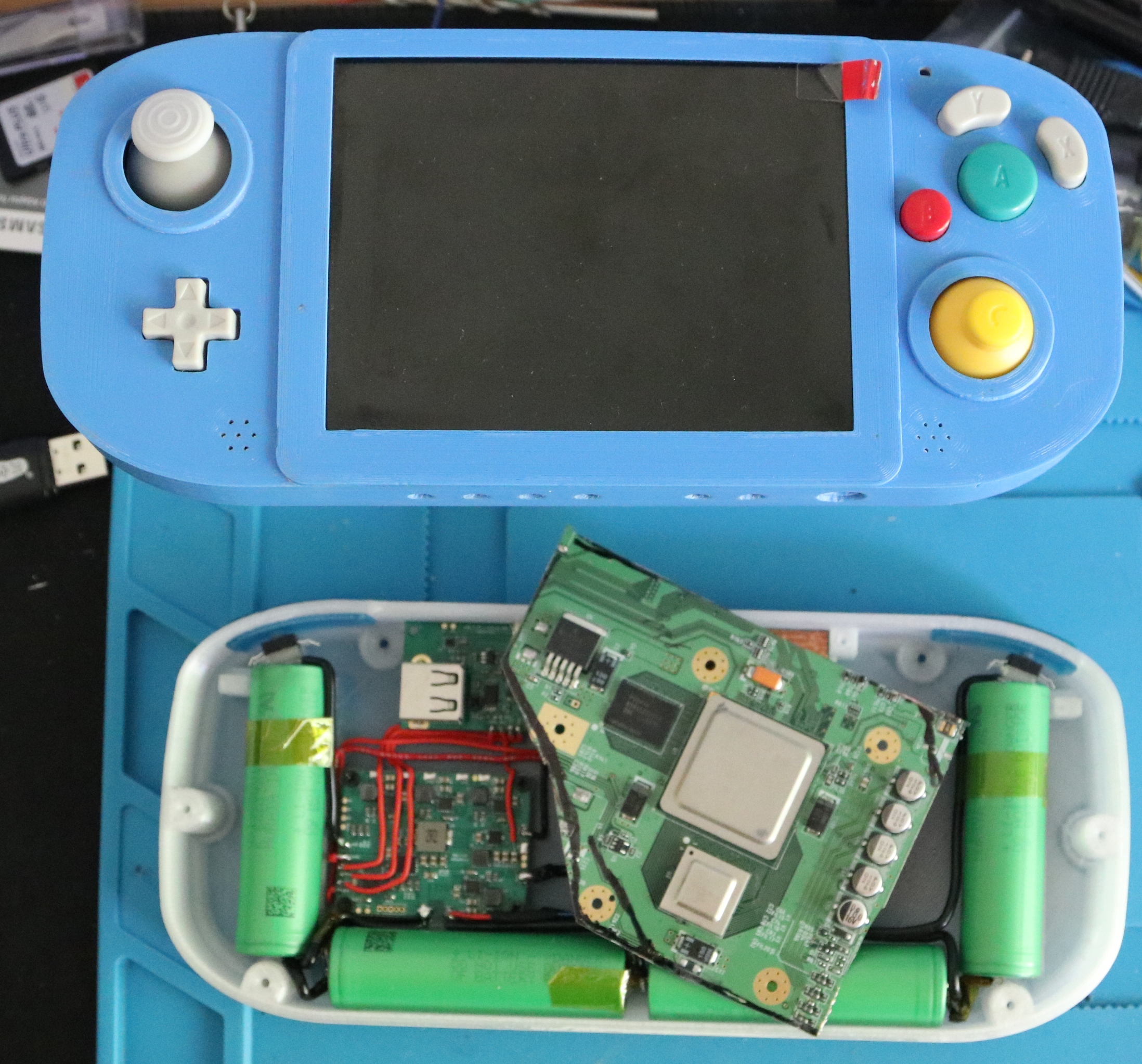
Below is what the board looks like on summit of the 1000-Wii case and me testing out the buttons making sure they fit the instance. I did many exam fits throughout this build making sure that all the parts would become together the way I wanted them besides. Below is me slowly taking off the edges of the Wii and so it would fit the example the way I needed information technology to. You can also see the sharpie marks nonetheless to be removed by isopropyl alcohol. A couple of spoilers here every bit the battery organization has been set up.
Soldering Battery Assembly and Installing Fan
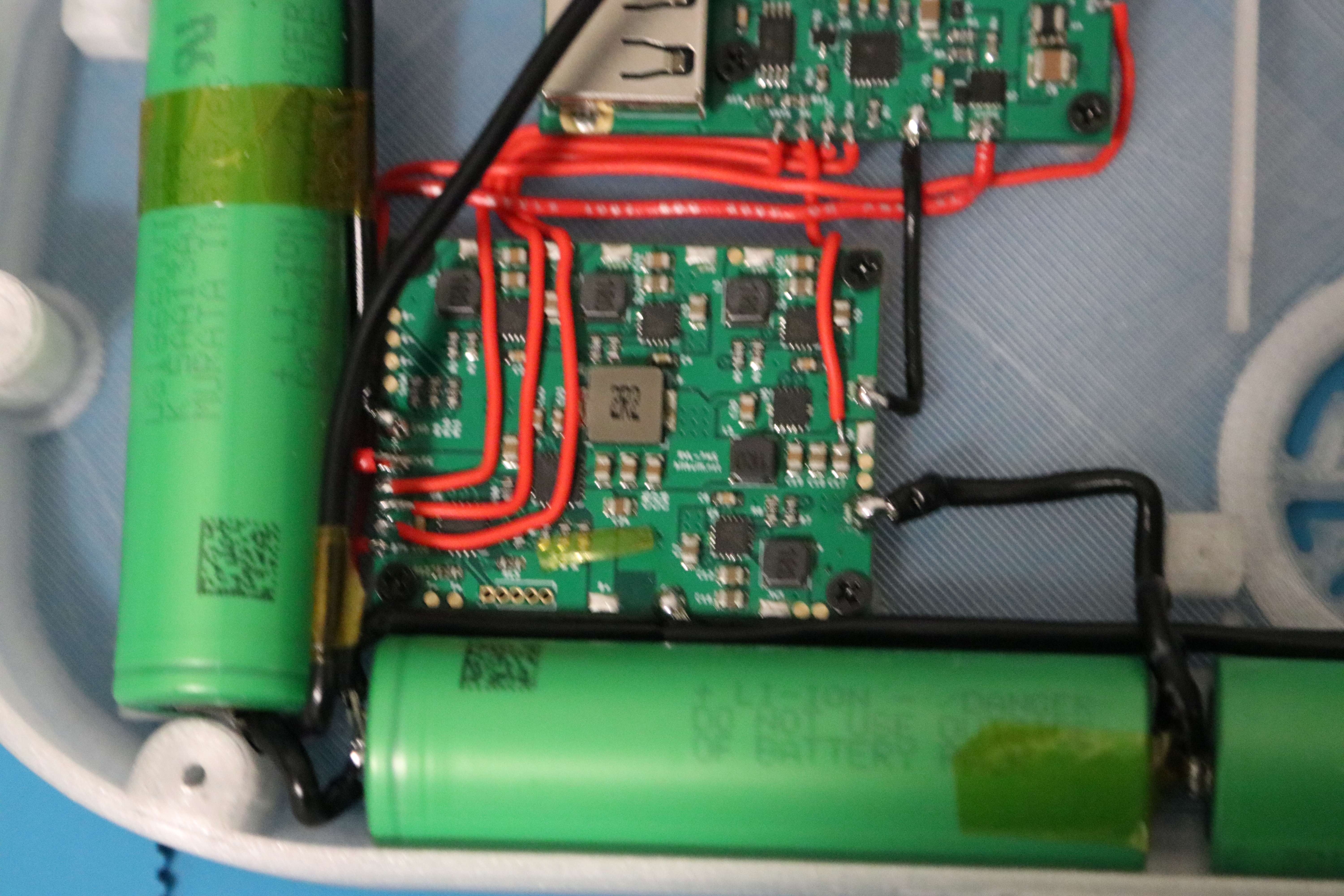
Outset I installed the PMS and RVL boards to the setup. These boards communicate using I2C Connections and both run on 5V. These are the red wire connections you see here. In Flux nosotros trust, I used a lot of it for this build. Equally this build continues you volition hopefully see my soldering amend, I took my fourth dimension to brand sure the wires lay down correctly, your tweezers are the best friend here. Here I also used a Outset button from a game cube (shaved down merely a petty) captured between the case wall and the push on the RVL board. You can run across this process happening in the images beneath.


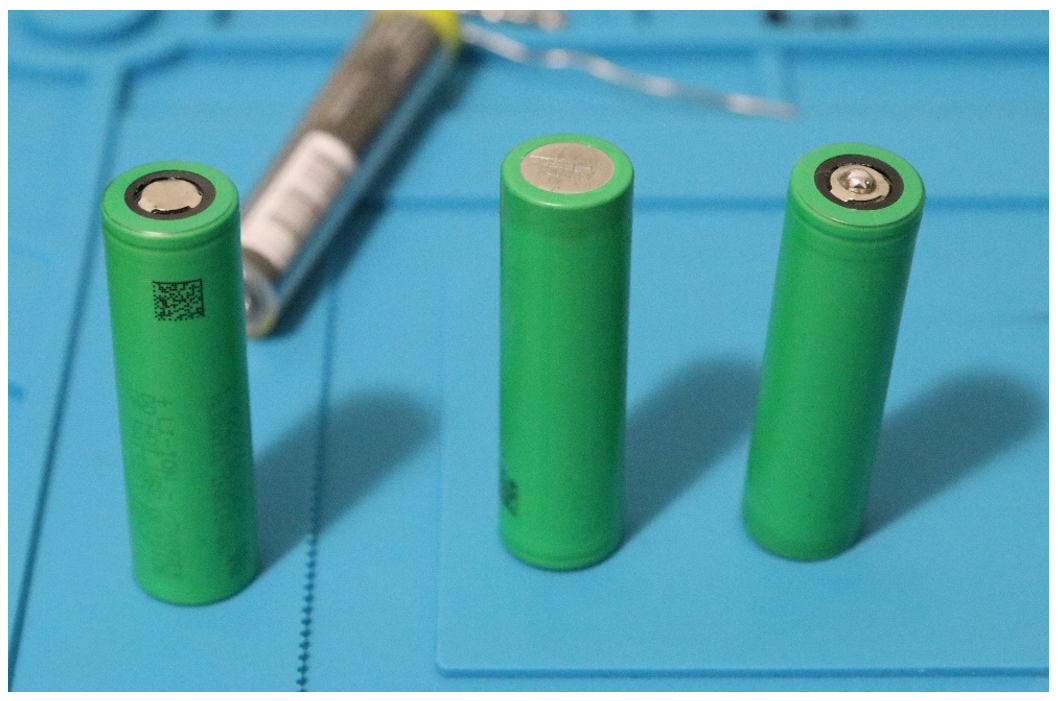
Now I started the procedure of preparing the 18650s. This involved carefully scratching the top and bottoms of the batteries with a razor blade. Then with flux and solder chop-chop getting the solder to connect to them. Be ultra-careful! They can explode if overheated particularly if they are poor-quality batteries. Do not heat them for longer than 5 seconds and spend a long time letting them cool downwardly. Yous can meet the whole process of getting solder onto them beneath, one on the right is unscratched, ane in the middle has scratches and one on the right has a solder blob.
It would be worthwhile at this bespeak to test the voltages and amps inside each of these batteries making sure that there is non a huge variation between them. Huge variation equals sparks which are very bad so don't connect them if they are. There are a number of ground wires that yous will need to adhere to the bottom of PMS board from the batteries. So you want to solder the batteries together in a 2s2p configuration. Do not connect the live power finish to the bombardment merely even so. The corners will be tight. At this bespeak, I only had black wire of a good thickness then at this point wires that are 5V have a lilliputian scrap of yellow record wrapped effectually them. The images below show this.

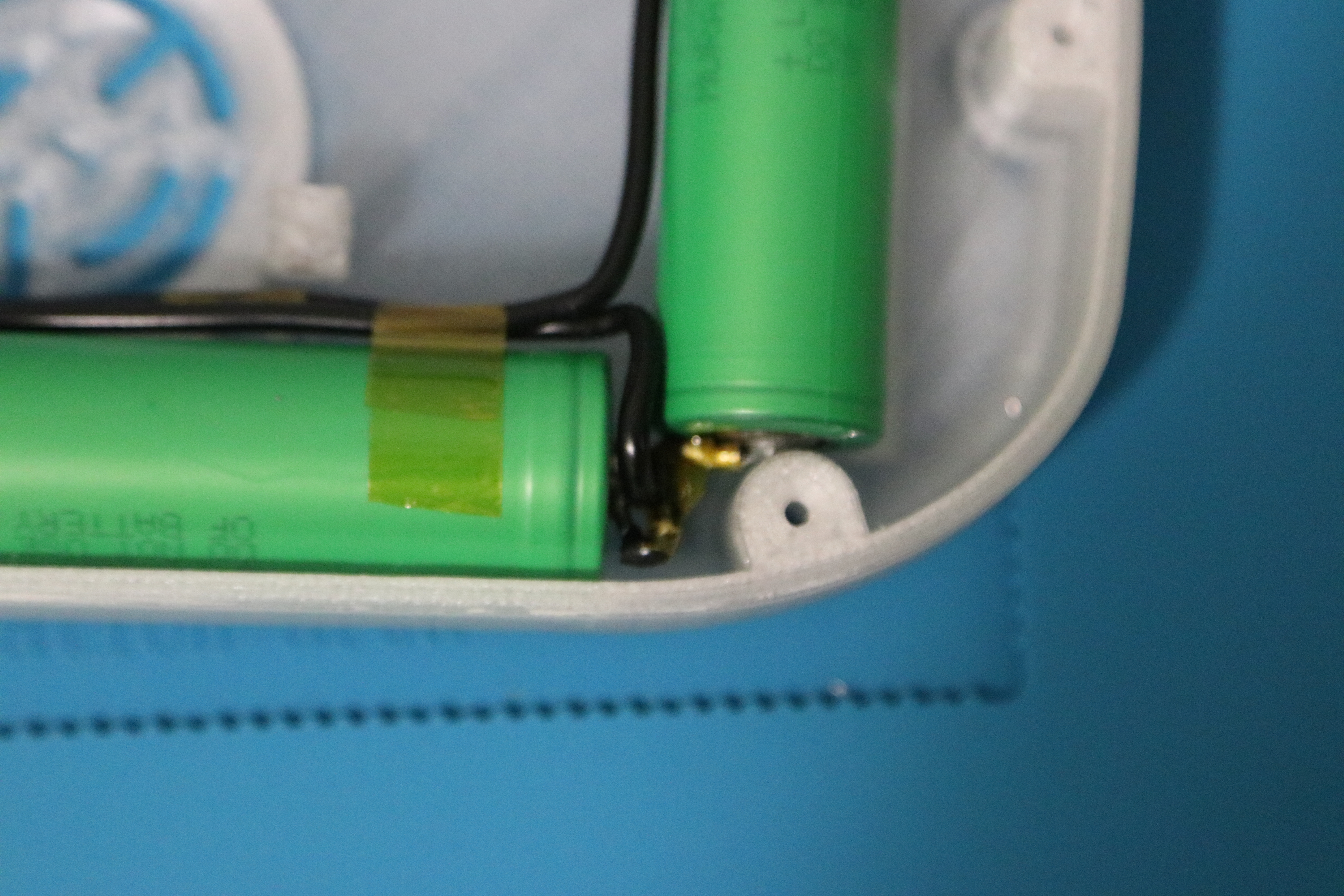
Having achieved this we can at present place the fan and copper plate into position. There are two wires coming from the fan which nosotros will connect to the ground and 3.three Volt on the PMS. Once that is connected our beginning test of the system tin can happen! Connect the power connectedness to the 5V PMS. Be smoothen with this action. Then printing the ability button and put the example to your ear. If y'all can hear the fan offset-upwards and spin you have successfully put the battery together for the Grand-Wii!

Having done that successfully you tin plough your attending to the Wii.
Soldering Wii Assembly, Screwing it Down, and Outset Jiff (Blended Feed + Slight Setback)
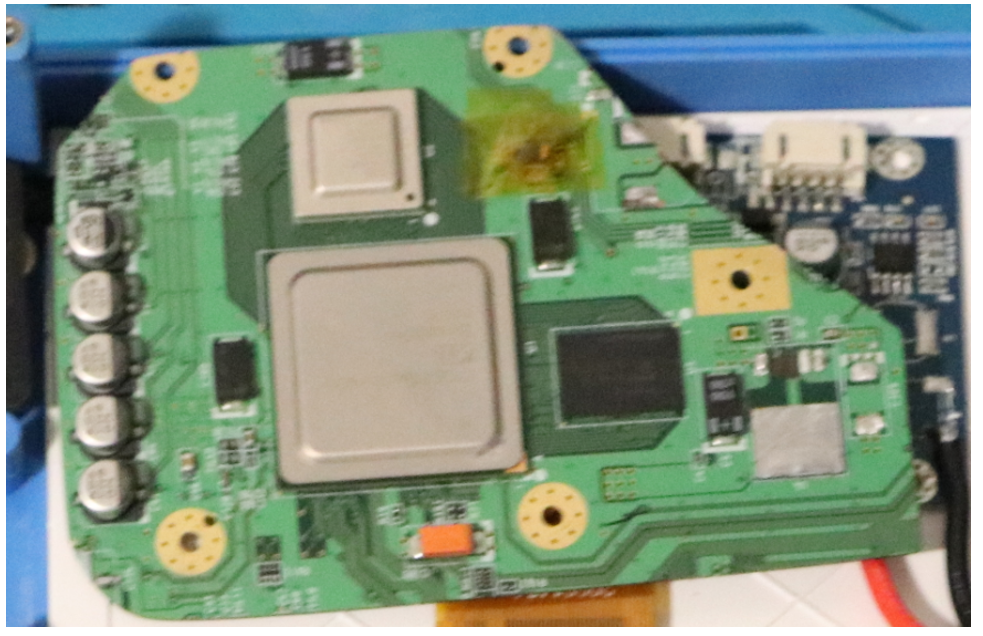
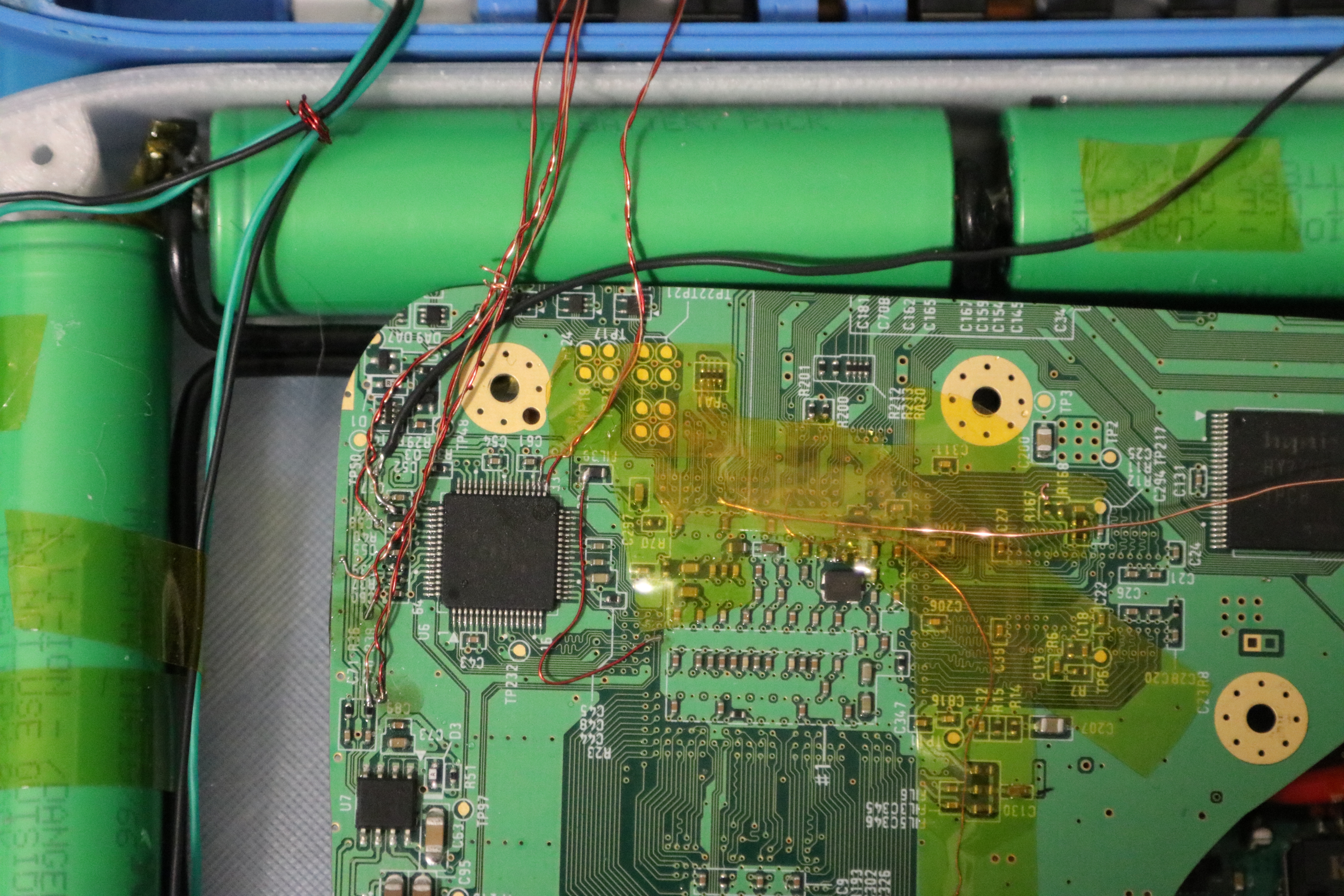
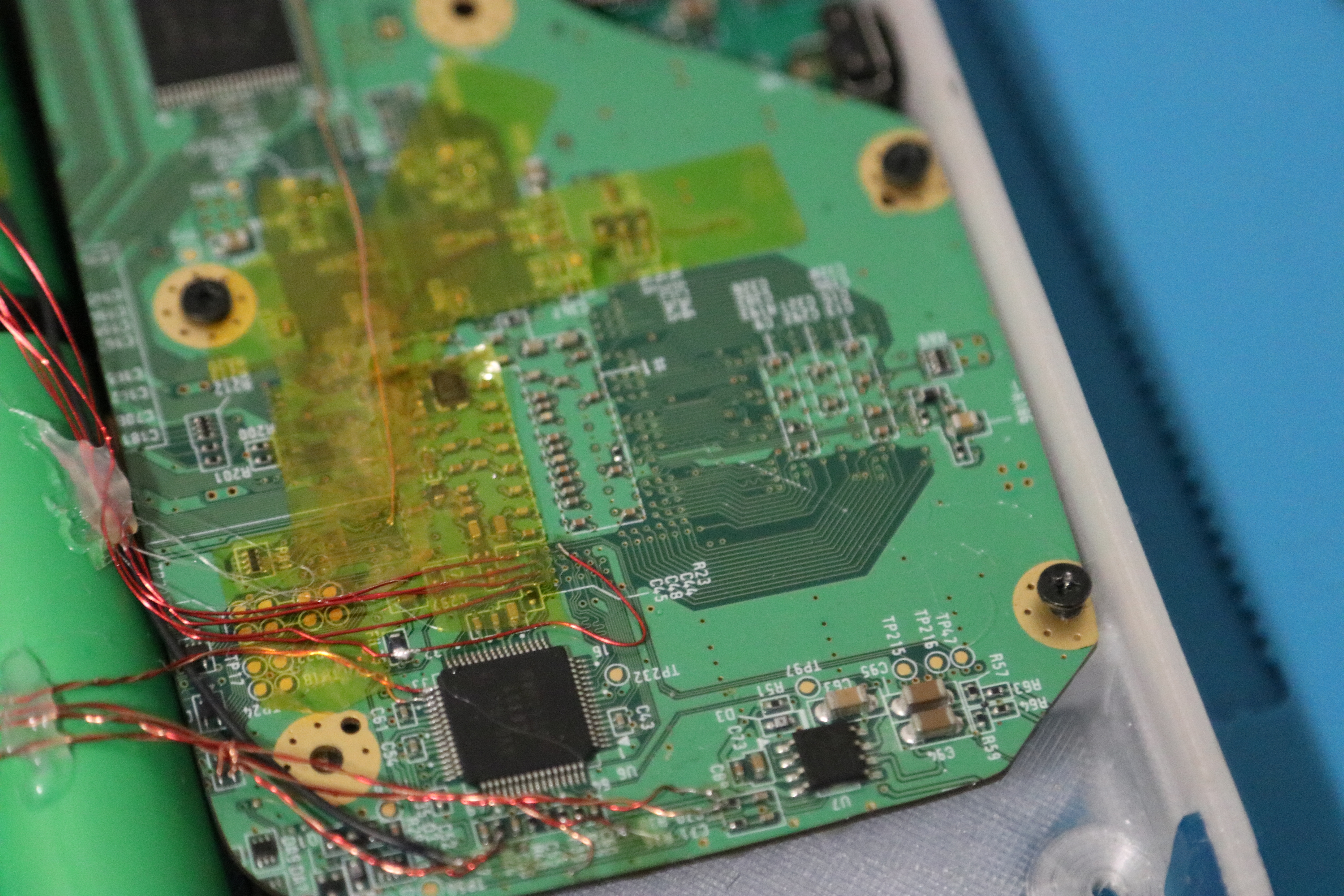
Firstly we need to relocate that U10 onto our trimmed Wii. This will supply the correct voltage and signal to the Wii and then information technology will kick upwardly normally and not lock itself out. This involves cutting a copper trace AND soldering with 30AWG magnet wire. You accept two chances with this as the U10 works the aforementioned as the U9 but you must accept your fourth dimension doing this. Bank check the Resources section on how to practice this exactly. Once consummate cover the whole area in Kapton tape to proceed it secure which you can run across below. And so brand certain to disconnect the power to the PMS so the system is no longer powered. If not you chance dissentious all the componentry.
And then you lot can plow your attention to requite the Wii the voltages it needs from the PMS. Think of the setup and so far as an open sandwich with the Wii like the cheese inside. The Wii needs 5V, 3.3V, 1V, one.15 V to boot and operate correctly so we will supply this from the PMS.

While we are at it the Screen controller needs some ability as well. I pulled off the big capacitor and then it would run on five Volt which I fed upwardly to information technology along with a ground wire.

So all nosotros demand to practise is connect a wire from the composite point on the Wii to the composite of the screen and we can see if this Wii is actually still alive! Before this step, you lot will have no idea if your Trim was successful so seeing this screen is a huge boost to confidence! Even now it makes me smile to meet. At this stage, you lot can too use a magnet wire to solder the data wire from the elevation of the Wii to the RVL board. Thus when you plug in your USB with the game data on it yous volition be actually able to run into your games.


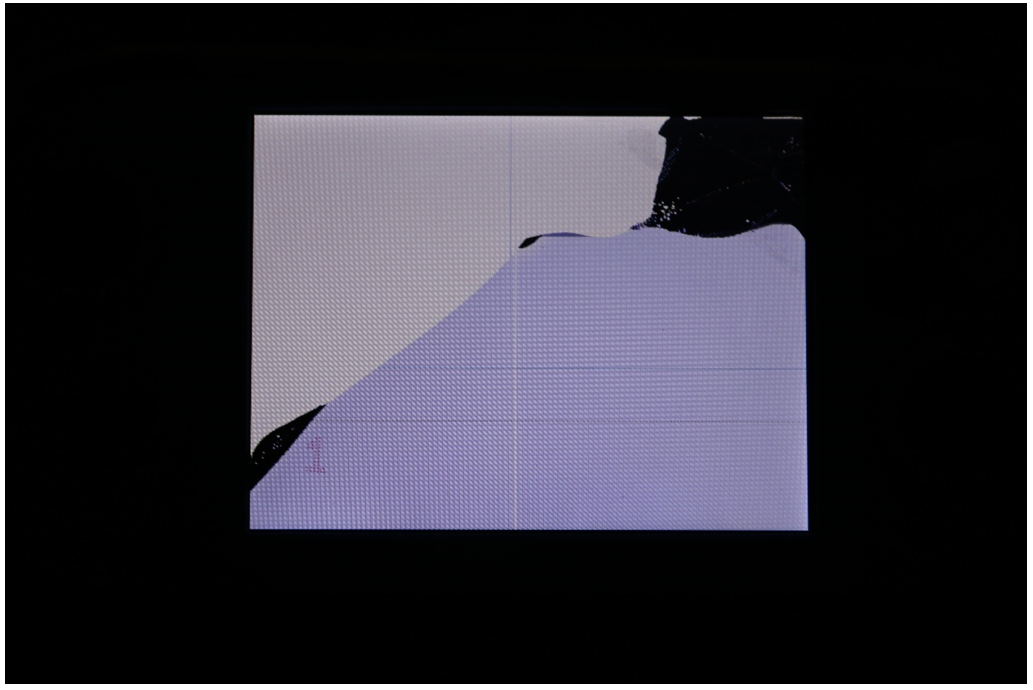
In my build, I had an unfortunate scissure in my screen (likely from my crude handling) So I got to this stage initially and had no idea if the Wii was functional. Fabricated for extended anxiety waiting for the new screen role to come in. You can meet this in the epitome below.
Soldering Push Assemblies and VGA
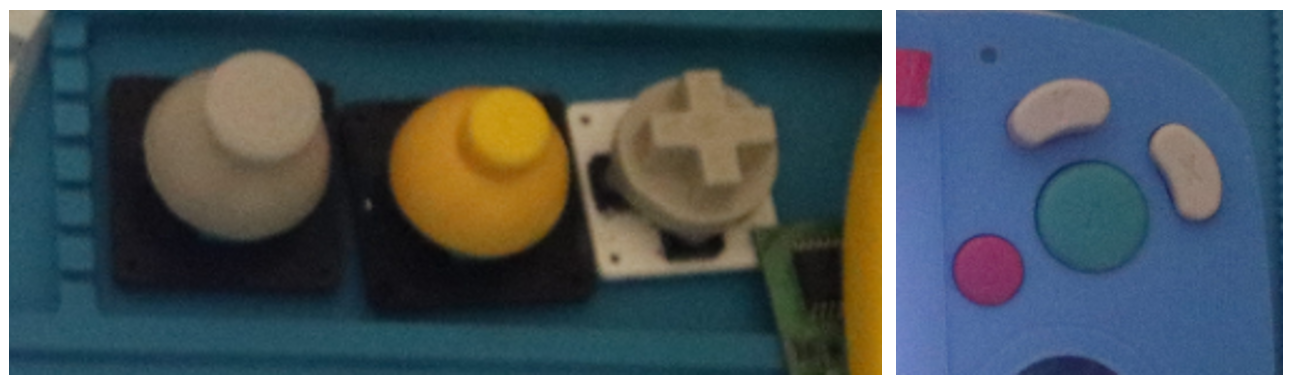
All the buttons have a 3D printed mount that they live on and all use grey Silicone squishy buttons. The mount has holes for the ground and live pins to become through. These were slightly taller than the Orangish silicon squishy buttons and so little contumely washers were added to make the standoffs slightly taller in the instance where necessary. Time was spent also shaving downward the X, Y, A, and B buttons so that they would not sit too proud of the case. Superglue was used to adhere all the components together. Having dry fitted them multiple times. Below you lot can see images of this.
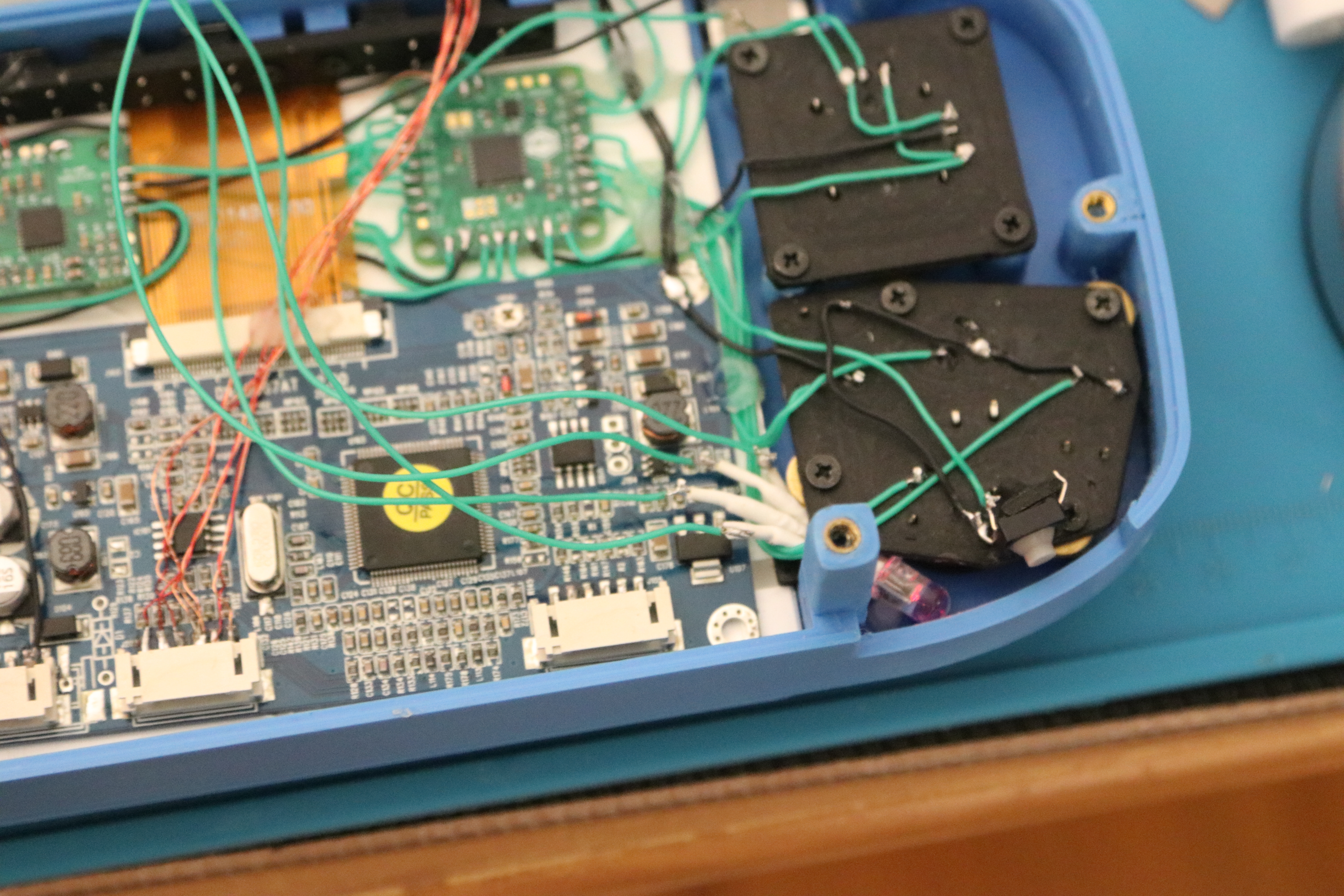
And so all the buttons including the Right and Left bummers which were all connected together on the GC2+. This board likewise requires ground and 3.3V and Information pivot to the Wii. This data wire is a single AWG magnet wire that goes direct to the Wii Board. Amazing to me that this sends all the data to the inputs. All the ground connectors need to exist connected for the D-pad and the ABXY button wires.
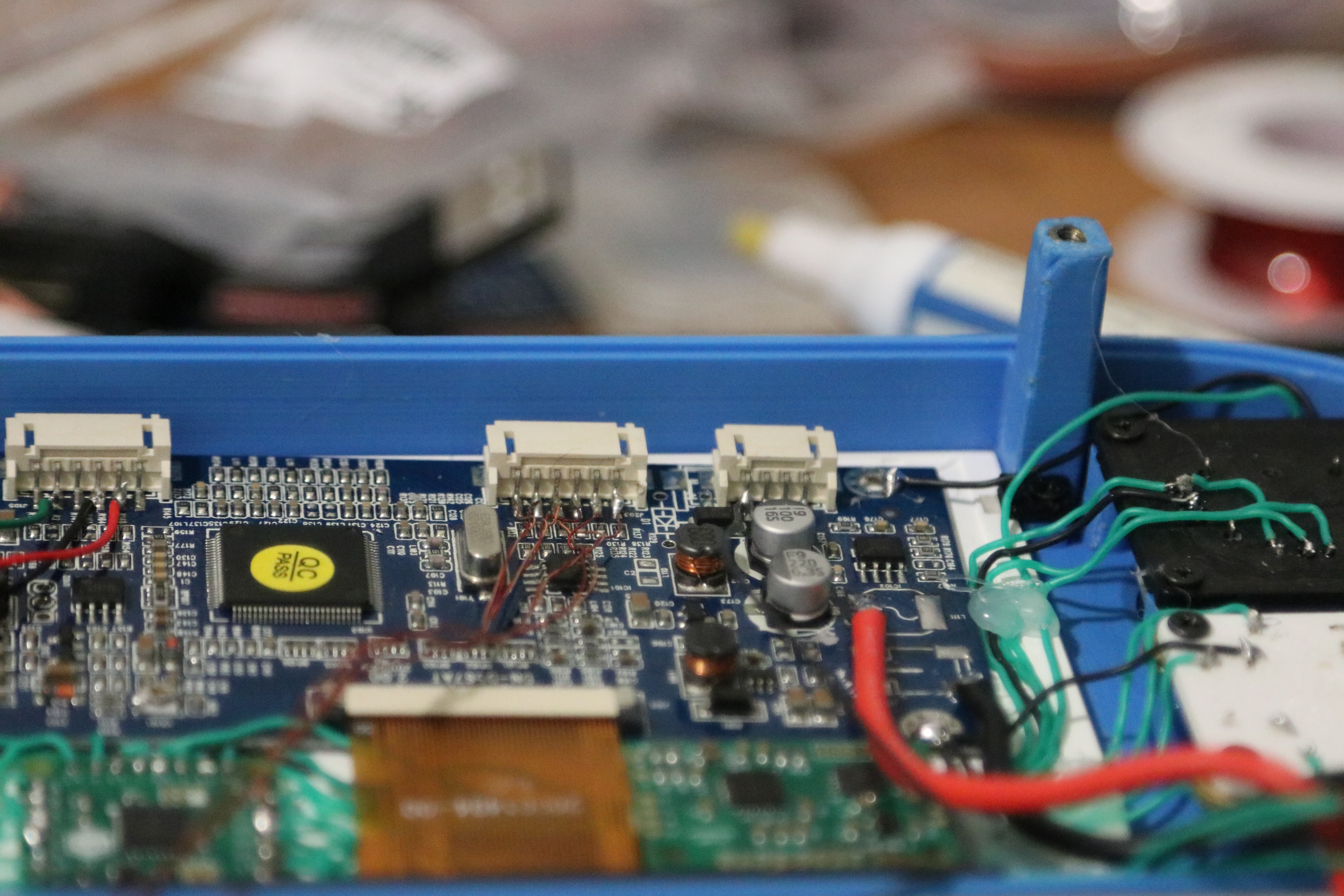
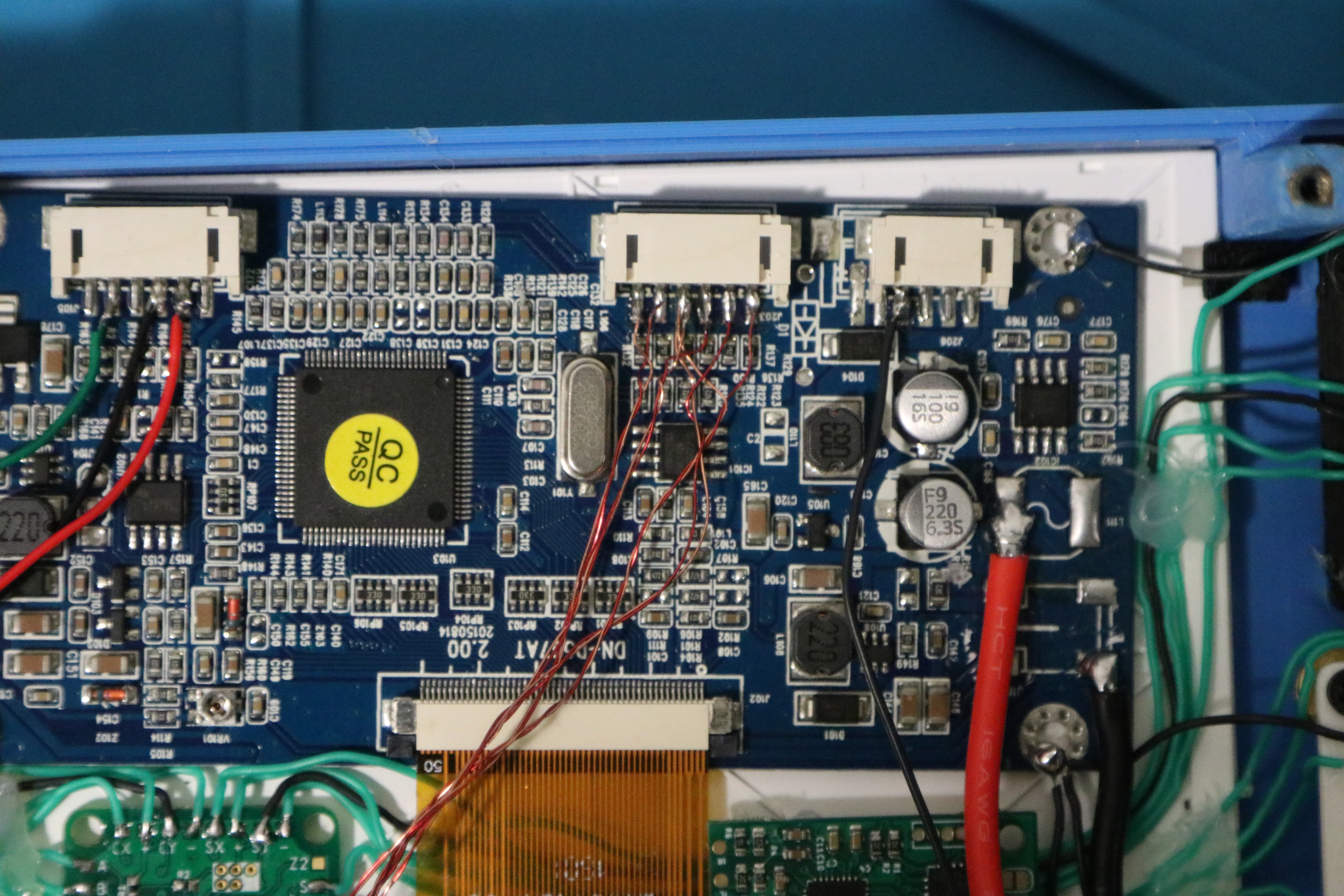
Once I connected up the majority of controls I turned my attention to the VGA output. VGA produces a much better image quality than composite but information technology does require some serious magnet wire to solve information technology. For the RGB of the VGA each wire must have a ground wire attached nearby. I used a drill to scroll magnet wire of two different colours to achieve this. The RGB each has exam pins that you tin can employ to transport the data simply the other part of VGA is Horizontal and Vertical Sync which must exist taken from the blackness brainbox. This is a very frail operation that needs to be done with extreme care. Once all those connections are washed you lot need to short iii.3V on the board to the video swap and so that way the Wii will only display VGA. Run across beneath for a lot of the magnet wire connections that I did. All these wires need to go to the VGA output on the screen. Brand sure to hot glue some strain relief as this will close together.
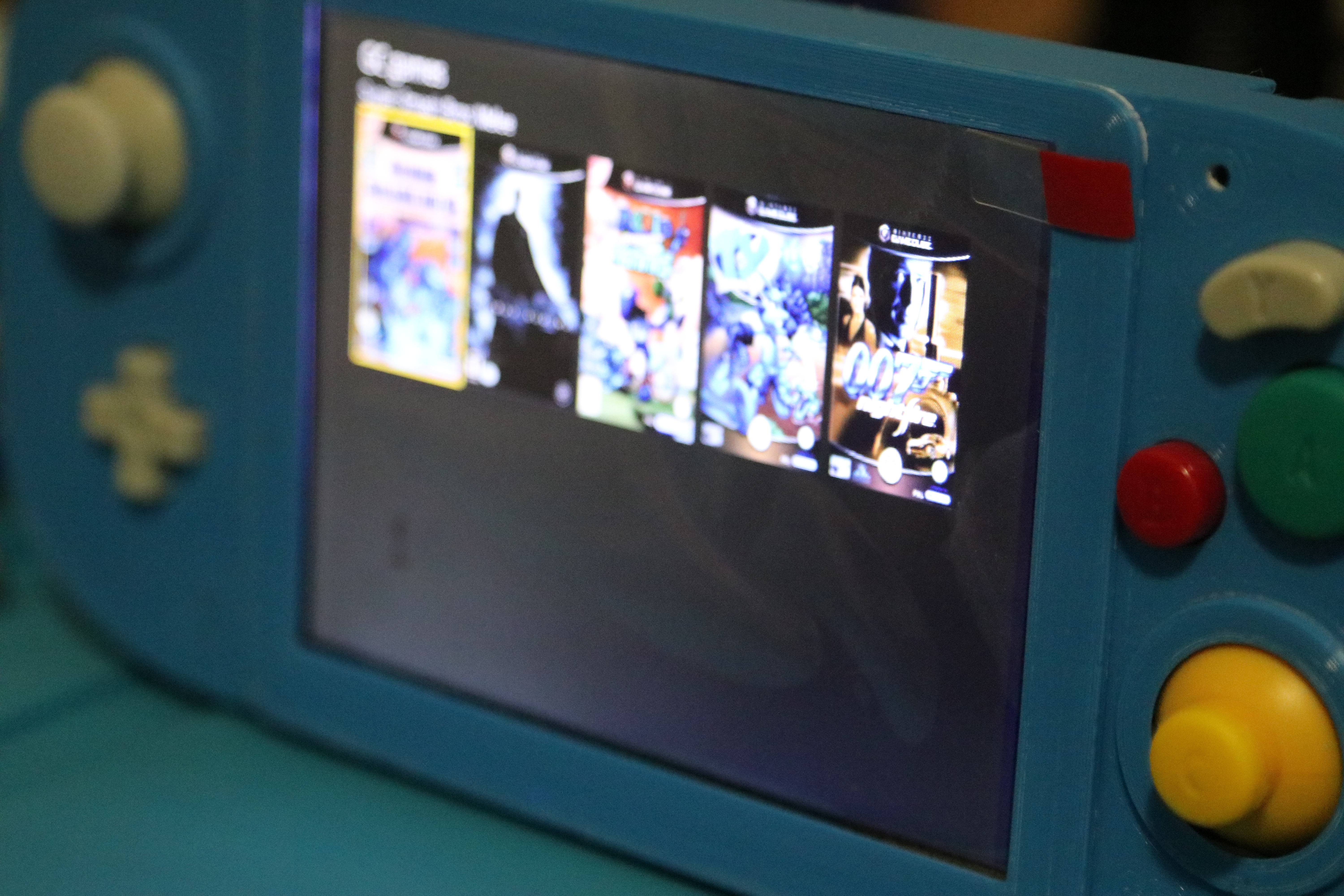
I did not read the Spec sheet of the screen I owned so for the first couple of attempts my colours were all wrong like below. But one time I checked out the specification canvass I stock-still this problem right upward. See beneath for an image of the colours all weird looking.
Finally, we want this to produce some rad sound so work was washed on the Amp. For this to piece of work, we need to wire four magnet wires from the Wii to the Amp module. Then we demand to supply the Amp module with 3.3 V, Footing and one.viii volts which we source from the PMS. So we need to connect the speakers to the R+ R- and L+ L- connectors on the Amp. At this stage, I have not given it the power to use an aux cord (I will very shortly) so to brand the system recollect there is not Aux Short the Mic Ground and Due south Pads. See beneath for images of this.
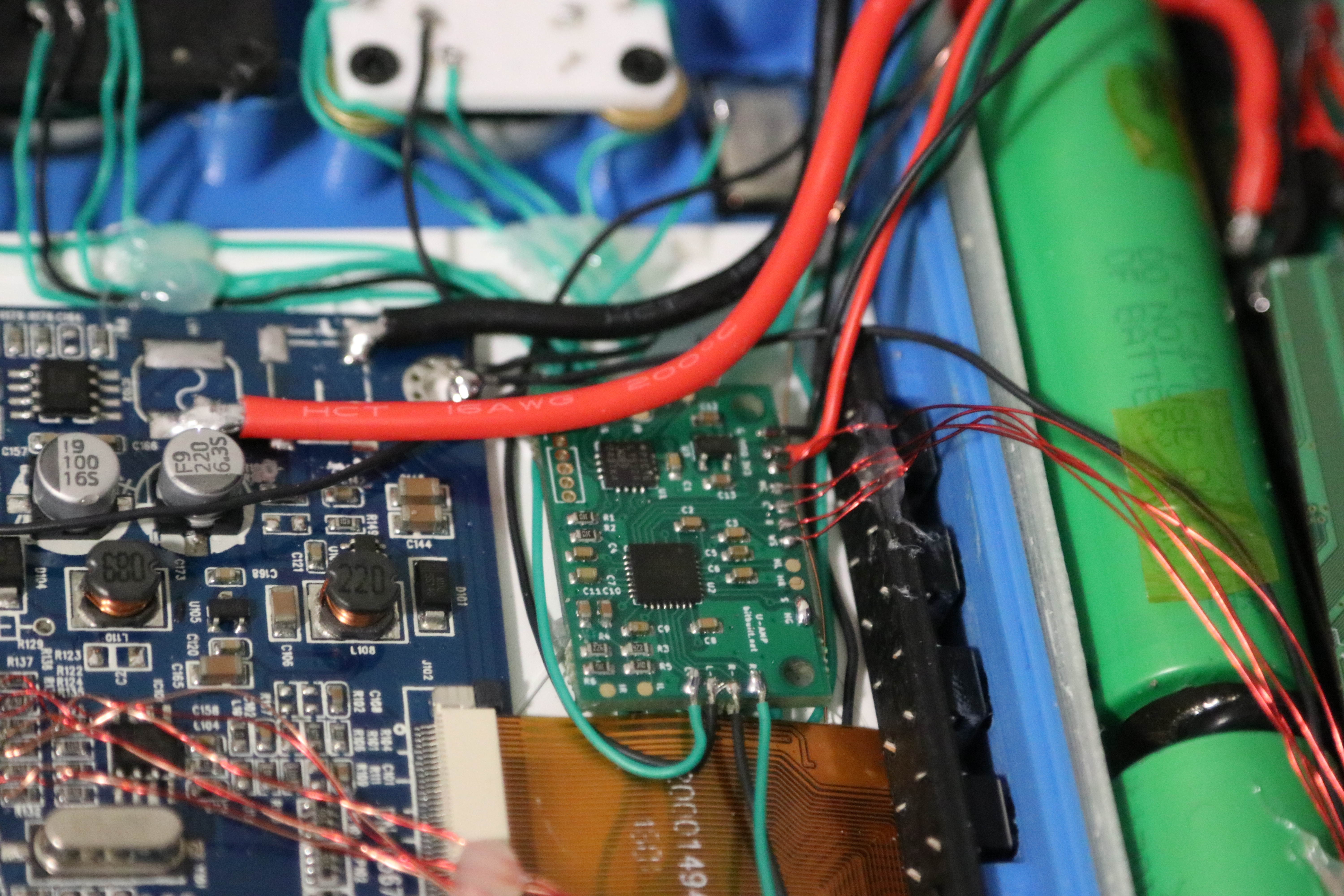
The next step was adding a LED lite to tell me how much power the system has. This has iv wires which connect to the PMS on little pads that a named appropriately B, R, g, ~.
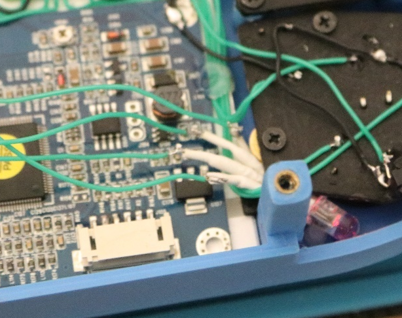
At that place are some things left to do but it was very late at this point and this was meant to be a weekend projection. The Aux Cord needs to be finished and screen control settings. As a quick fix to get the settings pretty correct you can solder the screen connector that comes with the screen like in the epitome below and adjust the settings to what you want. And then once the settings are where you want you can unsolder the connections. Beneath you can see this.

Below is the terminal image of everything all soldered together earlier I airtight it.
Screw It Close
And with that I gently folded over the wires making sure none were catching on anything, screwed information technology shut, crossed my fingers, and turned it on. And to my amazement, it has been working ever since. Beneath is some glory shots.
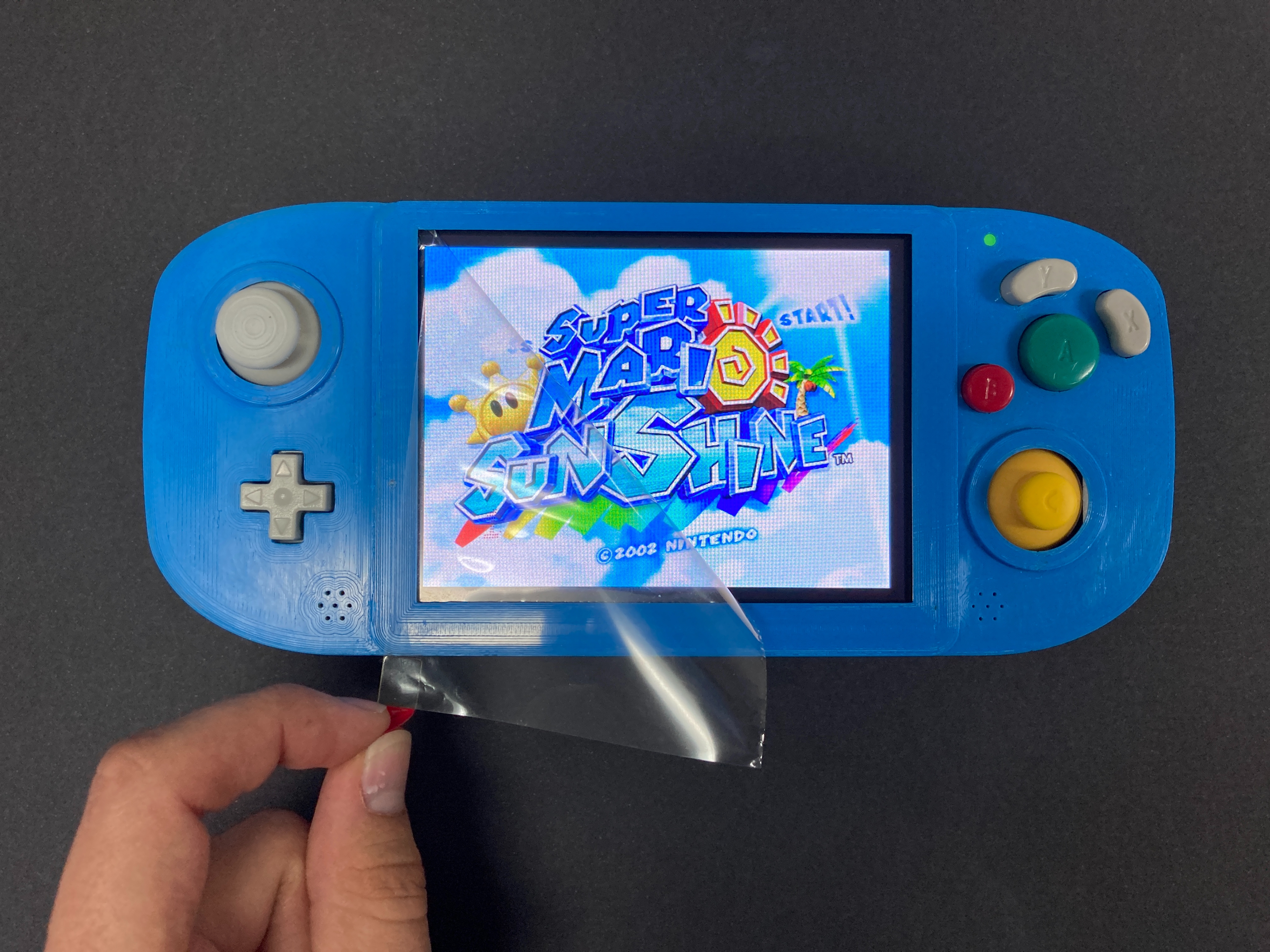
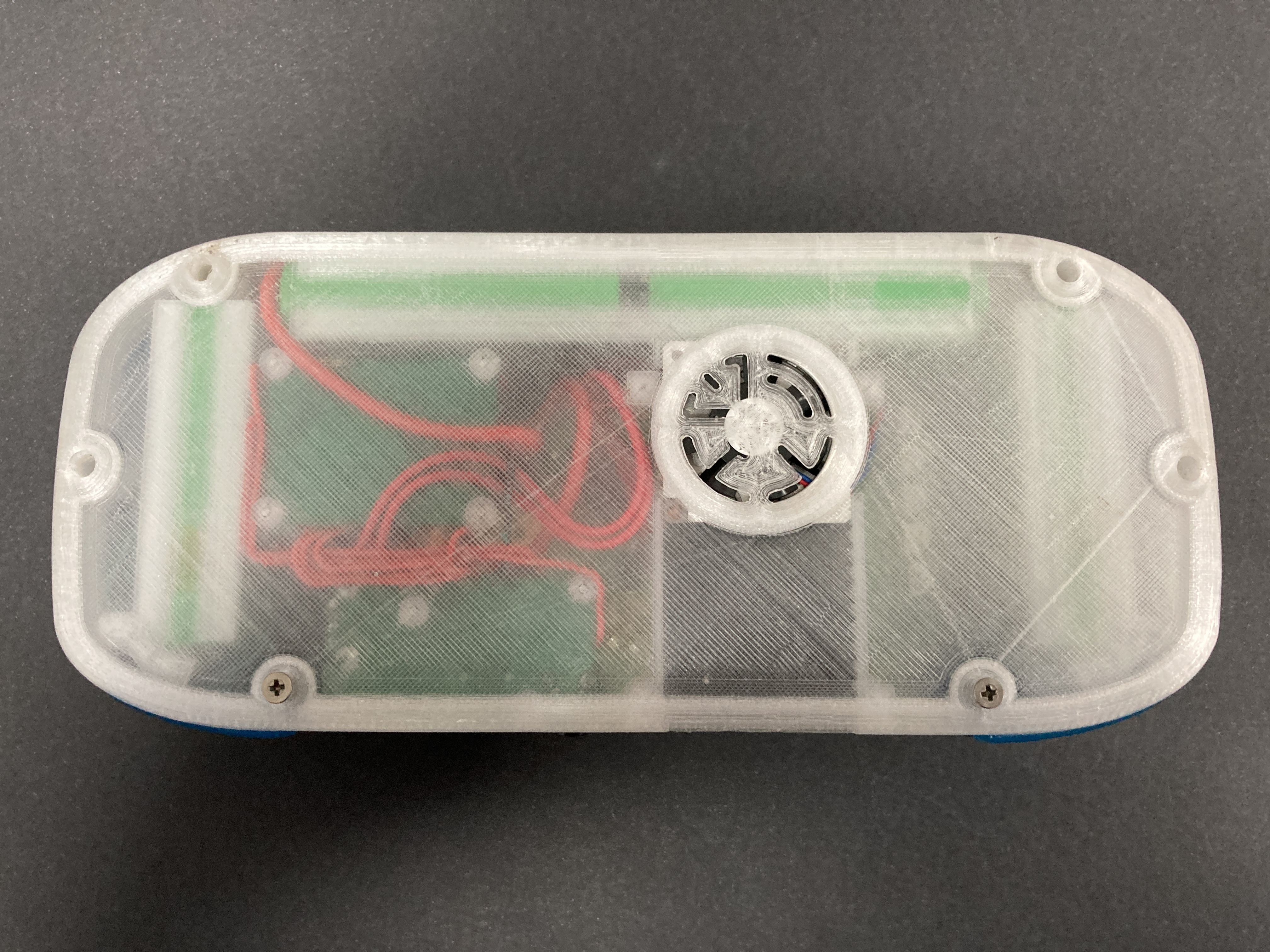

Fourth dimension for some gaming.
Source: https://core-electronics.com.au/projects/g-wii-project/
0 Response to "How To Make A Wii Laptop"
Post a Comment